
International Cinema: What Getting Into Foreign-Language Film Actually Involves

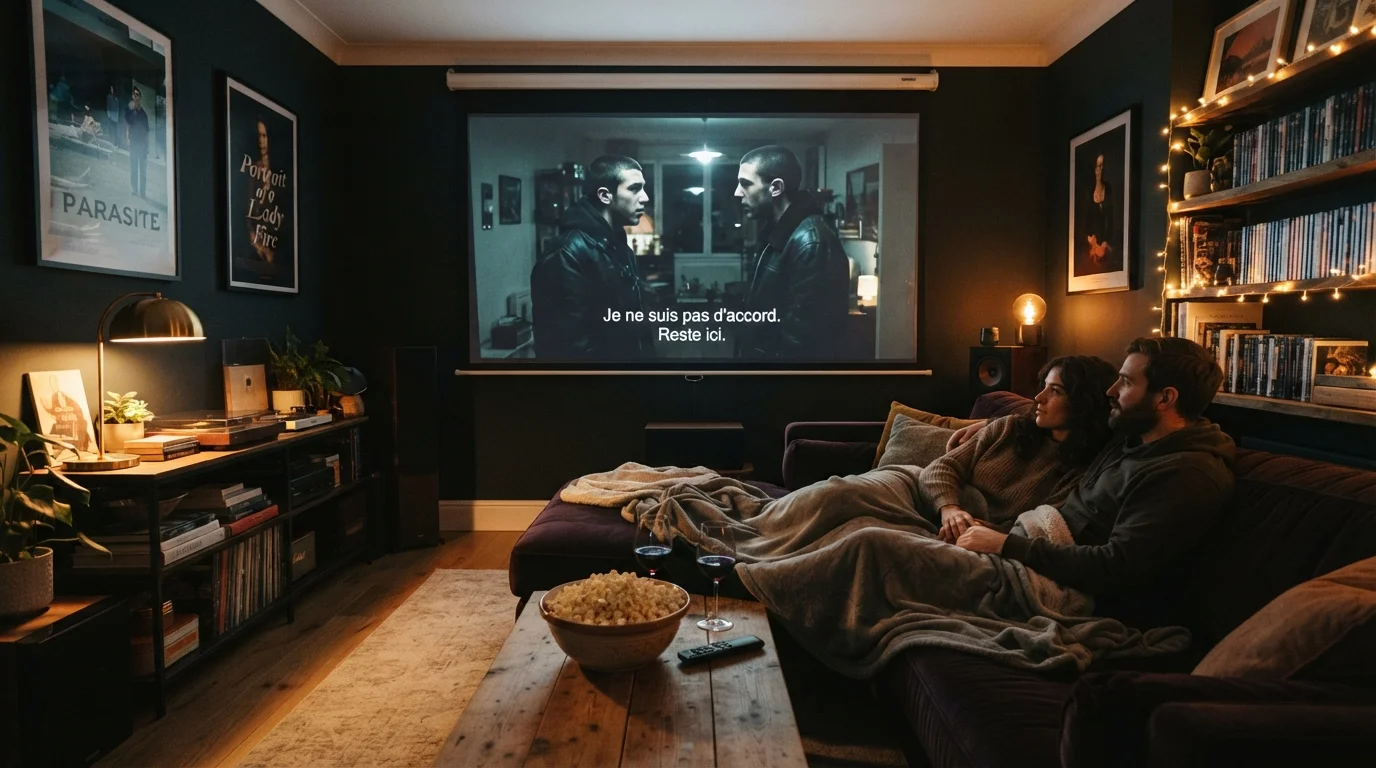
Key Takeaways
- Subtitles become natural quickly - most viewers adjust within one or two films.
- Foreign films often move at a slower, more deliberate pace than Hollywood blockbusters.
- Several major streaming platforms carry substantial world cinema libraries.
- Starting with award-winning titles from familiar genres eases the entry point.
- Dubbing is an option but subtitles preserve the original performance and tone.
Start here
Why Foreign-Language Film Feels Daunting at First
Next
Reading Subtitles Without Losing the Film
Then
Different Storytelling Rhythms to Know About
When you're ready
Where to Actually Find World Cinema
Go deeper
Building Your Own Watching Practice
Why Foreign-Language Film Feels Daunting at First
For many viewers, the barrier to world cinema isn't really language - it's unfamiliarity. Unfamiliar directors, unfamiliar studios, unfamiliar storytelling conventions, and yes, the small but real cognitive overhead of reading subtitles while watching a scene. That combination can make the whole thing feel like homework rather than entertainment.
Here's what's worth knowing upfront: that feeling fades fast. The same mental shift that happens when you get used to a new TV show's rhythm happens with subtitles and foreign narrative styles - usually within the first film, sometimes within the first act. The movies themselves are doing exactly what movies always do: telling stories about people, places, and emotions that are recognizably human even when the context is very different from your own.
To understand what kind of film you're dealing with before you commit, it helps to know your genres. Our field guide to film genre labels is a useful starting point for decoding the vocabulary you'll encounter on streaming platforms.
Subtitle
Text displayed at the bottom of the screen that translates or transcribes the spoken dialogue into another language. Subtitles are timed to match what's being said on screen.
Dubbing
A process where the original actors' voices are replaced by voice actors speaking in a different language. The lip movements may not perfectly match, but the dialogue is fully in the viewer's language.
Arthouse cinema
Films that prioritize artistic expression and personal vision over commercial entertainment formulas. They often appear in specialist cinemas and streaming platforms rather than mainstream multiplexes.
Slow cinema
A filmmaking style characterized by long takes, minimal dialogue, and a contemplative pace. It prioritizes mood and observation over plot-driven storytelling.
Festival circuit
The network of international film festivals - such as Cannes, Venice, and Sundance - where new films premiere and compete for awards before reaching general audiences.
Neorealism
A filmmaking movement, originating in postwar Italy, that focused on everyday working-class life, often using non-professional actors and location shooting instead of studio sets.
Reading Subtitles Without Losing the Film
Subtitles have a reputation for splitting your attention, but the mechanics are kinder than they seem. Good subtitle timing - which professional distributors spend real effort calibrating - is designed to sync with natural speech rhythm, so you're rarely choosing between reading and watching.
A few practical adjustments help. Watching on a larger screen (or from a shorter distance) reduces how much your eye has to travel between the image and the text. Avoiding multitasking matters more with subtitled film than with ambient TV - this is a film that benefits from your full attention anyway. And if a scene is visually complex, it's entirely acceptable to rewind 20 seconds. That's what the button is for.
Give Your Eyes 10 Minutes to Adjust
Most first-time subtitle readers feel the split attention most acutely in the opening minutes. Stick with the film past the first scene and the adjustment usually happens naturally. Starting with a film that has clear, high-contrast subtitles - typically any title from a major streaming platform - makes the transition easier.
Dubbing is the alternative: professional voice actors replace the original dialogue in your language. It removes the reading burden but also removes the original vocal performance, which is a significant artistic element. Most cinephiles prefer subtitles for this reason, though dubbed versions are worth knowing about if accessibility is a priority.
Different Storytelling Rhythms to Know About
Hollywood films follow well-established pacing norms - a story beat roughly every ten minutes, escalating conflict, a clear three-act structure. These conventions are so deeply absorbed that when a film departs from them, it can feel like something is wrong. Often, nothing is wrong.
Many filmmaking traditions - Italian neorealism, Iranian social drama, Taiwanese slow cinema, French New Wave - deliberately resist the urgency of mainstream narrative. Scenes breathe. Conversations meander productively. The camera observes rather than propels. This isn't a lack of craft; it's a different set of priorities, one that values interiority and atmosphere over plot momentum.
Knowing this going in helps calibrate your expectations. A South Korean thriller will often feel energetically familiar. A Romanian drama may ask more patience, and reward it differently. Neither is a better experience - they're different cinematic languages, and part of getting into world cinema is expanding your fluency in more than one.
Pacing Differences Are Intentional
If a foreign film feels slow compared to what you're used to, that's often a deliberate artistic choice rather than a production shortcoming. Directors like Andrei Tarkovsky, Hou Hsiao-hsien, and Céline Sciamma have built celebrated bodies of work around restrained, unhurried pacing. Approaching that pacing with curiosity rather than impatience tends to open up the experience considerably.
Where to Actually Find World Cinema
Accessibility has genuinely never been better. Major streaming platforms now carry substantial foreign-language libraries, driven in part by the global success of titles from South Korea, Mexico, and Scandinavia in recent award seasons. Dedicated arthouse and repertory streaming services go much deeper - offering restorations of classic films alongside contemporary festival titles.
Finding a specific film after it leaves theatres involves understanding how distribution windows work. Our explainer on theatrical runs and streaming windows walks through the timeline and why some titles appear on streaming quickly while others take months.
For discovery, award-circuit shortlists are genuinely useful starting tools. The Academy's International Feature Film category, the Palme d'Or at Cannes, and the Golden Lion at Venice each year surface films that have been vetted by serious critical attention - and they're all searchable on streaming platforms.
Letterboxd
A social film diary and discovery platform where users log, rate, and review films from around the world. An excellent tool for finding world cinema recommendations curated by enthusiastic fellow viewers.
Criterion Channel
A streaming service dedicated to arthouse and classic cinema, with an especially strong international catalogue and curated thematic collections that help new viewers navigate world film traditions.
MUBI
A streaming platform focused on festival, independent, and foreign-language cinema. It offers a rotating library of handpicked films and editorial context that helps viewers understand what they're watching.
Building Your Own Watching Practice
Getting into world cinema is less about consuming a canon and more about building a habit of genuine curiosity. A useful first move: pick a country's cinema and explore it lightly rather than jumping randomly across global traditions. Spending a few weeks with Korean film, or a month with French cinema, gives you enough context to start recognizing recurring themes, directors, and stylistic signatures.
Engaging with what you watch - even briefly - deepens the experience. Writing a sentence or two about a film after watching it, or reading one critic's take, builds the kind of attentiveness that makes the next film richer. Our piece on how professional critics approach a screening offers a useful framework for thinking more analytically about any film you watch.
The world of cinema is genuinely enormous, and the goal isn't to see everything - it's to keep finding films that move you. That part, at least, works the same in every language.