

Key Takeaways
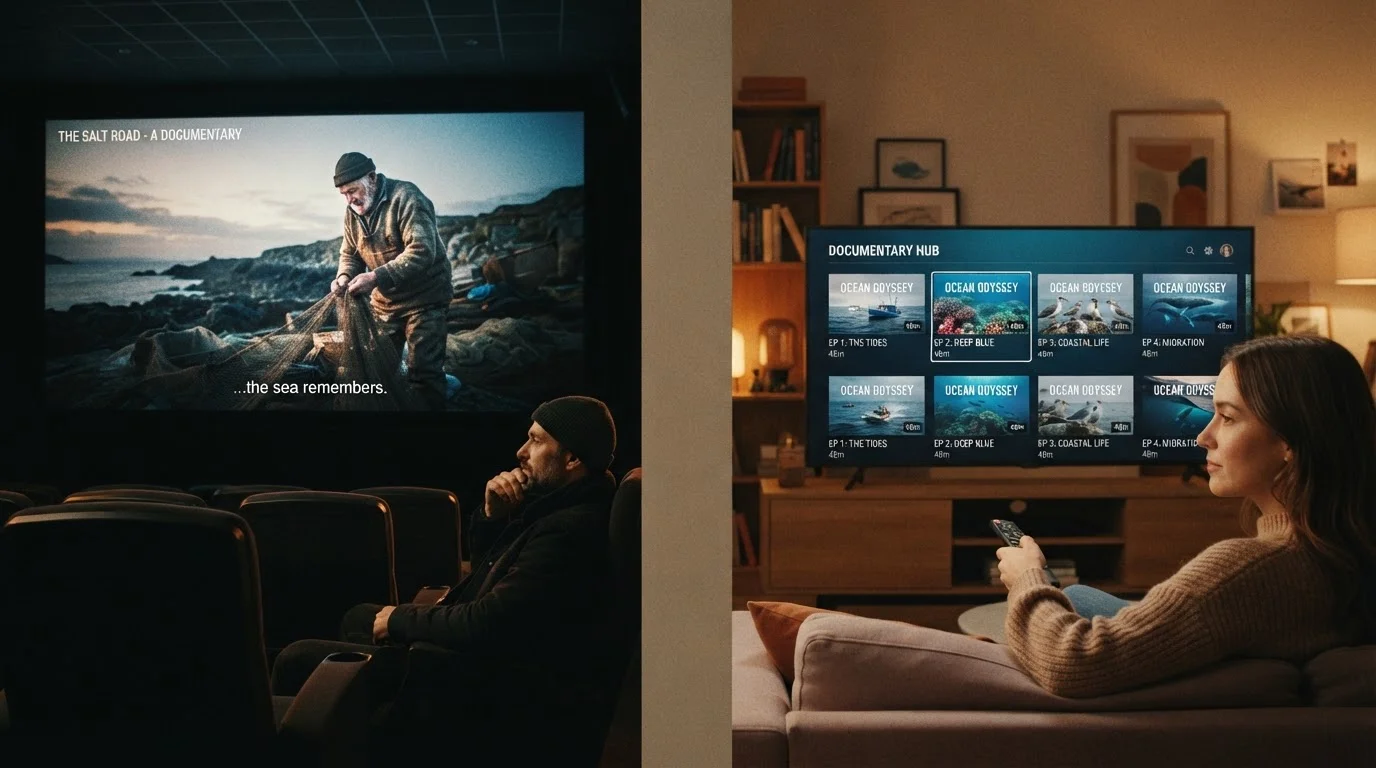
- A documentary typically tells its story in one sitting, while a docuseries unfolds across multiple episodes.
- Format choice directly shapes pacing, emotional arc, and how much complexity a story can carry.
- Documentaries tend to deliver a single, focused argument; docuseries allow for richer subplots and evolving revelations.
- Neither format is inherently superior - the subject matter and storytelling goals often determine the better fit.
- Streaming platforms have accelerated the rise of the docuseries, changing how audiences consume nonfiction content.
Our Verdict
Documentaries and docuseries are both powerful nonfiction tools, but they serve different storytelling needs. A documentary excels when the story has a clear, singular arc that benefits from a focused, cinematic treatment. A docuseries earns its length when the subject is sprawling, layered, or procedural enough to justify the audience's ongoing commitment.
| Best for | Recommended |
|---|---|
| Viewers who want a complete, self-contained nonfiction story in one sitting | Documentary |
| Audiences drawn to complex, multi-layered subjects with evolving revelations | Docuseries |
| Filmmakers working with a clear, thesis-driven narrative and tight subject scope | Documentary |
| Storytellers covering true crime, institutional scandals, or sprawling historical events | Docuseries |
The Core Difference: One Room vs. a Whole House
At the most basic level, a documentary is a single film - typically running between 60 and 120 minutes - that presents a complete argument or story within a contained structure. A docuseries is a multi-episode nonfiction series, each installment building on the last to create an extended narrative experience.
Think of it architecturally: a documentary is a single, well-designed room where everything you need is right in front of you. A docuseries is a house with multiple rooms, hallways, and maybe a basement worth exploring. The choice of format isn't just logistical - it fundamentally shapes what kind of story gets told and how deeply it can go. For a broader orientation to how nonfiction content fits into the wider streaming world, see our complete streaming landscape overview.
Pacing, Depth, and Emotional Architecture
Pacing is where the format divide becomes most tangible. A documentary operates under time pressure - every minute must earn its place. This constraint can be a creative asset: tight editing, a singular focus, and a decisive conclusion give the form its punchy, cinematic quality. Films like Searching for Sugar Man or Won't You Be My Neighbor? work precisely because their stories are complete as single experiences.
A docuseries, by contrast, can breathe. It can spend an entire episode on one witness's testimony, revisit a thread from a new angle in episode four, or let contradictions simmer across weeks of viewer conversation. This pacing suits subjects where complexity is the point - institutional failures, long-running criminal cases, or cultural movements with many competing voices.
| Documentary | Docuseries | |
|---|---|---|
| Typical length | 60-120 minutes | 3-10+ episodes |
| Narrative structure | Single, contained arc | Multi-episode, evolving arc |
| Depth of subject coverage | Focused, thesis-driven | Expansive, multi-threaded |
| Pacing | Tight, cinematic | Varied, can breathe or meander |
| Viewer commitment | One sitting | Multiple sessions over days or weeks |
| Best subject fit | Clear singular story | Complex, layered, or procedural topics |
The tradeoff: docuseries can also meander. When a story doesn't have enough material to sustain six episodes, padding becomes obvious and viewer engagement drops. The format should match the material, not the other way around.
What Streaming Has Done to the Format
The explosion of streaming platforms has dramatically shifted nonfiction storytelling toward the series format. Platforms prioritize engagement metrics tied to return visits, and a well-crafted docuseries - especially one with cliffhangers or episodic revelations - keeps subscribers coming back in ways a single film cannot.
~60%
Growth in nonfiction series on major streamers
Industry analysts have observed that nonfiction series output on major streaming platforms roughly doubled in the years following 2019, outpacing feature documentary growth.
4-6 hrs
Average docuseries total runtime
Most docuseries on major platforms run between four and six hours of total content, the equivalent of three to four feature-length documentaries.
This commercial reality has real creative consequences. Some stories that might once have been told as lean 90-minute documentaries now arrive as five- or six-part series, sometimes to their detriment. Conversely, subjects that genuinely need room to expand - sprawling true crime cases, multi-decade cultural histories - have found an ideal home in the format. Knowing which streaming models host which types of content can help you find what you're looking for; our guide to subscription vs. transactional streaming breaks down how the business models differ.
Choosing What to Watch: A Practical Frame
When deciding between a documentary and a docuseries on a given subject, a few questions help cut through the noise:
- How much time do you have? If you want resolution in one evening, a documentary fits the bill. A docuseries is a commitment.
- How complex is the subject? A portrait of one artist may be best served by a single film. A systemic investigation involving dozens of players probably needs episodes to breathe.
- Are you watching for argument or immersion? Documentaries tend to make a case. Docuseries often place you inside a world and let you sit with its ambiguity.
Understanding genre conventions more broadly can also sharpen your nonfiction viewing instincts - our field guide to film genres is a useful companion reference. Neither format is inherently more prestigious or more truthful; both require editorial choices, and both can be used to illuminate or to mislead. The format is a tool - what matters is how skillfully it's wielded.
Check the Runtime Before You Commit
Before you start a nonfiction title, glance at whether it's a film or a series and how many episodes it contains. A six-part docuseries with 50-minute episodes is a roughly five-hour investment - knowing that upfront helps you choose the right moment to start. Many platforms display total episode counts and runtimes on the title page.