

Key Takeaways
- The title proves ownership; the registration proves your vehicle is legally authorized to be on the road.
- Lenders typically hold or appear on the title until a car loan is fully paid off.
- Registration must be renewed periodically - deadlines and fees vary by state.
- Keeping both documents current helps avoid fines, failed traffic stops, and complications when selling.
- If either document is lost or damaged, your state DMV can issue a replacement.
Vehicle Title and Registration
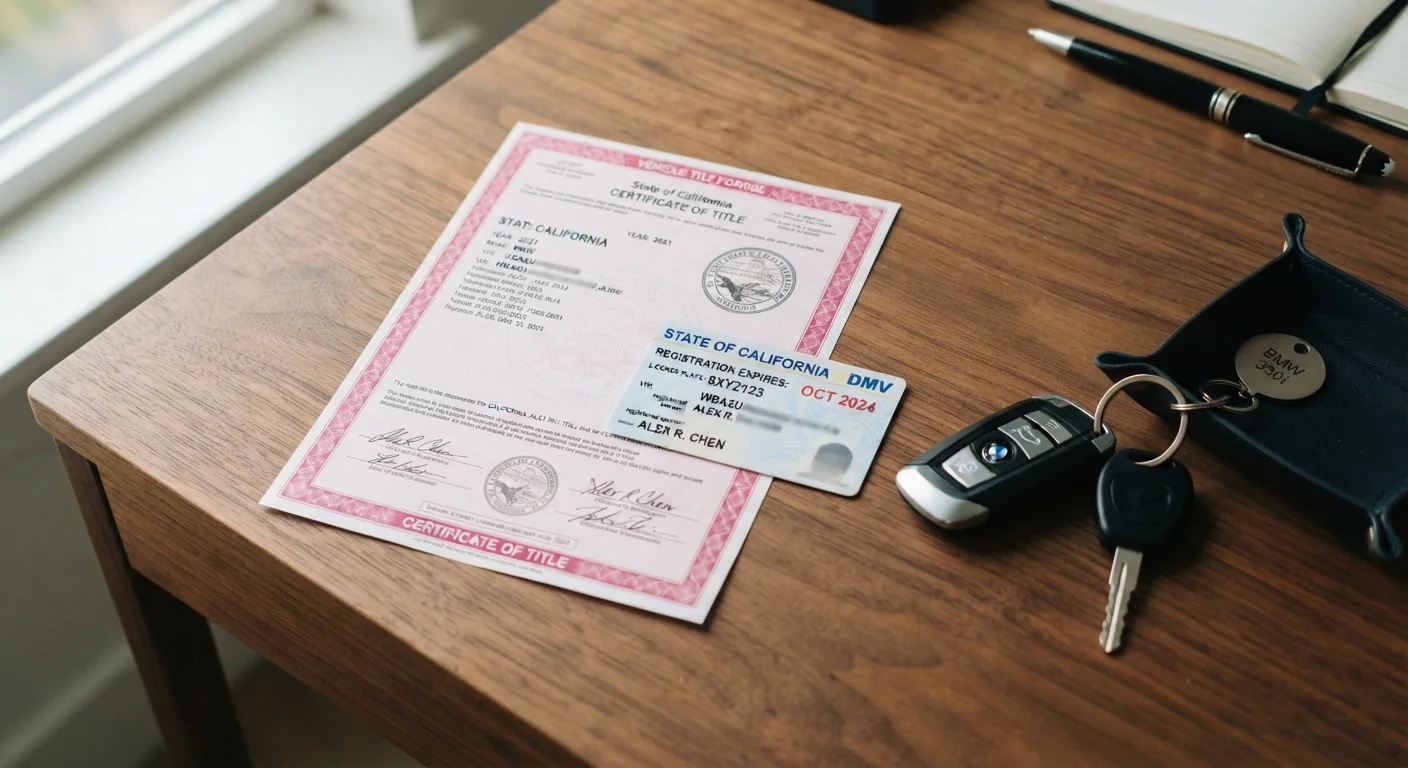
A vehicle title is the legal document that proves who owns a car. A vehicle registration is a separate document - issued by your state - that authorizes the vehicle to be driven on public roads for a set period. Both are required for lawful vehicle ownership and operation in the United States, but they serve distinct legal purposes.
Titles are governed by state DMV (Department of Motor Vehicles) agencies and may carry lien notations when a lender has a financial interest in the vehicle. Registration is renewed periodically and is typically tied to proof of insurance and, in some states, emissions or safety inspection compliance.
The Title: Proof of Ownership
Your vehicle title - sometimes called a certificate of title - is the foundational legal document that establishes who owns the vehicle. Think of it as the deed to a home, but for your car. It records the owner's name, the vehicle identification number (VIN), make, model, year, and any liens (financial claims) held by a lender.
When you buy a car outright, the title is issued in your name and you receive it directly. When you finance a purchase, a lender's name appears on the title as a lienholder. Depending on your state, the physical title may be mailed to you with the lien noted, or held at the DMV until the loan is cleared. Once you pay off the loan, the lender releases the lien and you receive what is called a clear title.
Never store your title in the vehicle. Keep it somewhere secure at home - a fireproof safe is ideal. If it is stolen or lost from the car, replacing it takes time and paperwork you would rather avoid.
Salvage and Rebuilt Titles: A Key Distinction
If a vehicle has been declared a total loss by an insurer and later repaired, it typically receives a salvage or rebuilt title instead of a clean one. This designation follows the vehicle permanently and can affect its insurability, resale value, and financing eligibility. Always check a vehicle's title history before purchasing a used car.
The Registration: Authorization to Drive
While the title answers who owns the vehicle, the registration answers whether this vehicle is currently authorized to be on public roads. Registration is issued by your state DMV and must be renewed on a regular schedule - most commonly annually, though some states offer multi-year options.
To renew registration, states typically require proof of current auto insurance and, in many jurisdictions, a passing emissions or safety inspection. Fees vary considerably by state and are sometimes calculated based on the vehicle's value, weight, or age.
50
States with unique registration renewal requirements
Every US state administers its own DMV system, meaning deadlines, fees, and required inspections differ significantly across state lines.
30-90 days
Typical window to re-register after moving states
Most states require new residents to transfer their vehicle's title and registration within this period of establishing residency.
Your registration card should be kept in the vehicle at all times. Law enforcement can request it during a traffic stop, and failing to produce it - even if the registration is technically valid - can complicate the encounter. For a full picture of your annual ownership responsibilities, see the Annual Car Ownership Checklist for US Drivers.
When These Documents Come Into Play
Both documents matter most at specific moments in vehicle ownership, and understanding those moments helps you stay prepared.
During a traffic stop: Officers may ask for your license, registration, and proof of insurance. An expired or missing registration card can result in a citation even if no other violation occurred.
When selling the vehicle: You must sign the title over to the buyer to legally transfer ownership. Most states also require a bill of sale. If the title has a lien, you cannot transfer ownership until the lien is released - another reason paying off a vehicle loan promptly has practical benefits beyond finances.
When moving states: If you relocate, you will generally need to re-register your vehicle and transfer the title within a state-mandated window - typically 30 to 90 days. Requirements differ, so contact your new state's DMV early. You may also want to review what your car insurance policy actually covers to ensure your policy meets the new state's minimums.
As a new owner, these responsibilities are part of a broader picture of vehicle care. The Car Maintenance for First-Time Vehicle Owners guide covers the essential upkeep tasks that go hand-in-hand with keeping your paperwork in order.