

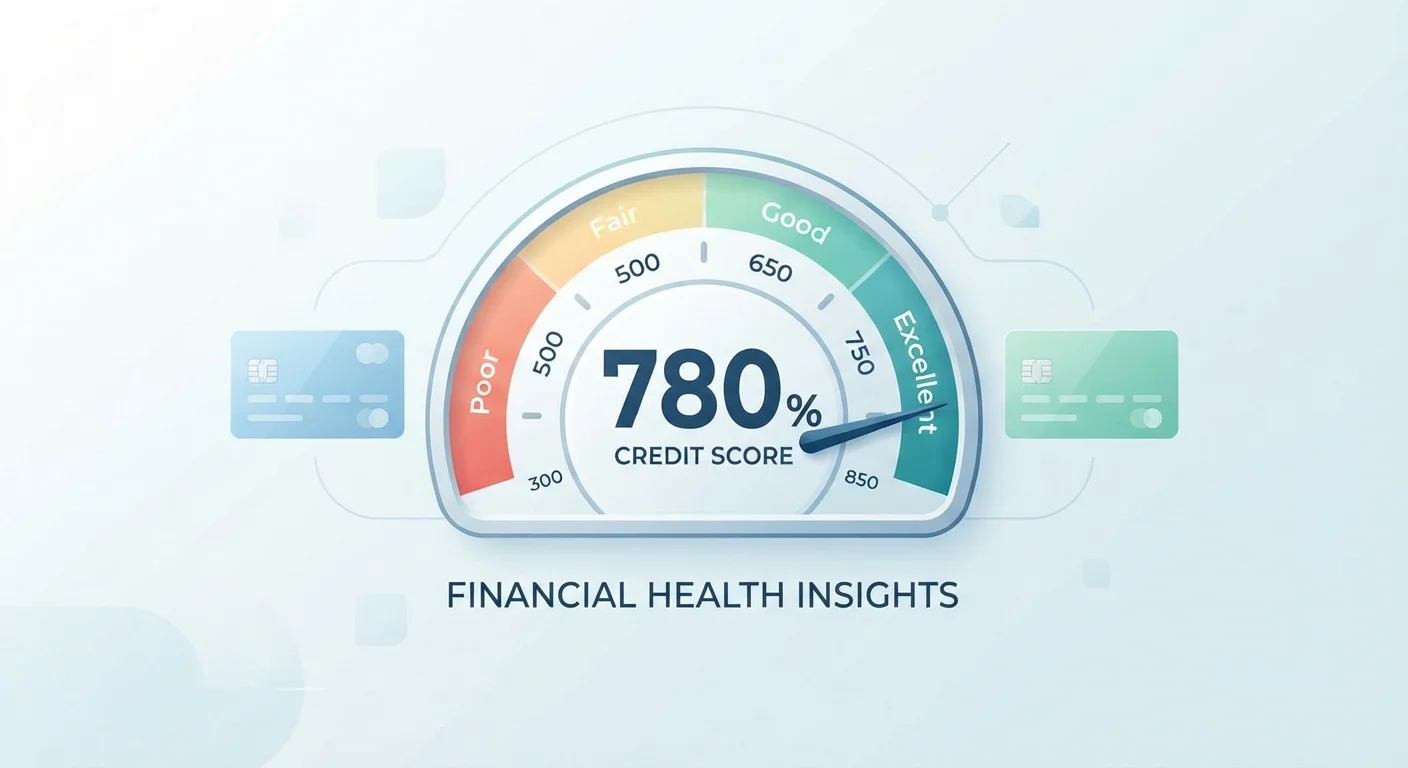
Key Takeaways
- Credit utilization typically accounts for roughly 30% of a FICO score - the second-largest factor after payment history.
- Keeping utilization below 30% per card and in total is a widely cited guideline; lower is generally better.
- Utilization is recalculated each month when card issuers report your balance to credit bureaus.
- Paying down balances - not just making minimum payments - is the most direct way to reduce utilization.
- Requesting a credit limit increase can lower utilization without changing your spending habits, though it may trigger a hard inquiry.
Credit Utilization Ratio
Credit utilization is the percentage of your available revolving credit (typically credit cards) that you are currently using. It is calculated by dividing your total outstanding balances by your total credit limits across all revolving accounts. For example, if you have a $1,000 balance on a card with a $4,000 limit, your utilization on that card is 25%. Lower utilization generally signals to lenders that you manage credit responsibly.
Scoring models like FICO and VantageScore calculate utilization both per-card and in aggregate across all revolving accounts, so high utilization on even one card can negatively affect your score.
Why Utilization Carries So Much Scoring Weight
Among the factors that shape your credit score, credit utilization consistently ranks as one of the most influential. Under the FICO scoring model, amounts owed - of which utilization is the primary component - accounts for approximately 30% of your score. Only payment history carries more weight.
The reason lenders and scoring models pay such close attention to utilization comes down to risk signals. When a borrower is using a large share of their available credit, it can suggest financial stress or over-reliance on debt. Conversely, low utilization tends to indicate disciplined borrowing habits. As the truth about credit score misconceptions article explains, many people mistakenly believe that carrying a balance helps their score - in reality, lower balances consistently produce better results.
~30%
Share of FICO score tied to amounts owed
According to FICO's publicly documented scoring framework, 'amounts owed' - the category that includes utilization - is the second-largest component of your FICO score.
<10%
Utilization rate common among highest scorers
Analysis of consumers with FICO scores above 800 consistently shows very low utilization rates, often in the single digits, according to data published by FICO.
30%
Widely cited utilization guideline threshold
Consumer financial education sources, including the Consumer Financial Protection Bureau (CFPB), commonly reference keeping utilization below 30% as a general benchmark for credit health.
It is also worth understanding that utilization has no memory. Unlike a late payment, which can remain on your report for up to seven years, high utilization is erased as soon as your balances are paid down and reported. This makes it one of the most actionable levers available to anyone working to improve their score.
How the Ratio Is Calculated - Per Card and Overall
Scoring models look at utilization in two ways: per individual card and as an aggregate across all revolving accounts. Both matter, and neglecting either one can limit your score even if the other looks healthy.
To calculate per-card utilization, divide the balance on a single card by that card's credit limit, then multiply by 100. To find your overall utilization, add up all revolving balances and divide by the sum of all revolving limits.
A practical example: if you have two cards - one with a $500 balance on a $1,000 limit (50% utilization) and another with a $0 balance on a $3,000 limit - your aggregate utilization is $500 ÷ $4,000, or about 12.5%. Your aggregate looks fine, but that first card's 50% per-card utilization may still be dragging your score.
Time Your Payments Strategically
Your card's statement closing date - not your payment due date - is typically when your issuer reports your balance to the credit bureaus. Paying down your balance a few days before the statement closes means a lower number gets reported, which directly reduces your utilization for that month's scoring cycle.
Because balances are reported as of your statement closing date, timing your payments strategically can make a meaningful difference. Paying down a balance before the statement closes means the lower balance - not the higher mid-cycle balance - gets reported to the bureaus.
Practical Steps to Lower Your Utilization
Reducing utilization does not require dramatic financial overhauls. A few targeted actions can move the needle relatively quickly.
- Pay down balances before the statement closing date. This ensures the lower balance is what gets reported. Even a partial paydown matters.
- Make multiple payments per month. Mid-cycle payments reduce your balance before the reporting date, without requiring you to change your overall spending level significantly.
- Request a credit limit increase on existing cards. A higher limit with the same balance lowers your ratio automatically. Be aware this may involve a hard inquiry, which has a small, short-term impact on your score.
- Avoid closing old cards unnecessarily. Each closed card removes its limit from your total available credit, which can raise your utilization rate on remaining balances.
- Spread spending across cards. Concentrating all spending on one card can push that card's utilization high, even if your overall rate stays moderate.
If you are rebuilding credit and limited on options, tools like secured cards and credit-builder products can increase your available credit over time. The comparison of secured cards and credit-builder loans offers a detailed look at how each approach works and who benefits most from each.
Before applying for any new credit - which temporarily affects your score through a hard inquiry - it is worth doing a full review of your financial standing. The pre-application financial review checklist walks through exactly what to assess first.
This article is for general informational and educational purposes only and does not constitute personalized financial advice. Readers should consult a qualified financial professional for guidance tailored to their individual circumstances.