

Key Takeaways
- Seasonal maintenance tasks catch problems early, before they escalate into expensive repairs.
- Each season brings specific vulnerabilities - targeting them at the right time is most effective.
- Many high-impact tasks require no special tools and take under an hour to complete.
- Skipping routine upkeep often costs significantly more in emergency repairs over time.
- A simple calendar-based schedule is the most reliable way to stay consistent.
Why timing matters in home maintenance
A home's systems face different stresses in different seasons - the roof takes the brunt of winter weather, the HVAC system strains in summer, and water heaters work hardest as temperatures drop. Aligning maintenance tasks with those seasonal rhythms means you're addressing each vulnerability at the moment it matters most, rather than reacting to a failure after it's already happened.
The financial logic is straightforward: a $10 air filter, a $5 can of weatherstripping, or 30 minutes on a ladder can prevent repair bills that run into hundreds or thousands of dollars. That principle applies across home systems just as it does for vehicles - as explored in our Household Essentials hub, consistent upkeep is the most reliable cost-control strategy available to homeowners.
The six tasks below are organized by season, prioritized for impact, and framed for homeowners with basic DIY confidence. For tasks that involve electrical, gas, or structural systems, we've noted when professional help is the smarter call.
When to call a licensed professional
Several tasks in this list - such as checking gas connections, testing pressure relief valves, or working on electrical components - may require a licensed contractor depending on your comfort level and local regulations. When in doubt, get a professional assessment before proceeding. Many municipalities also require permits for certain repairs; always verify local requirements before starting any significant work.
Six seasonal tasks worth putting on your calendar
Spring: Inspect and clean gutters after winter
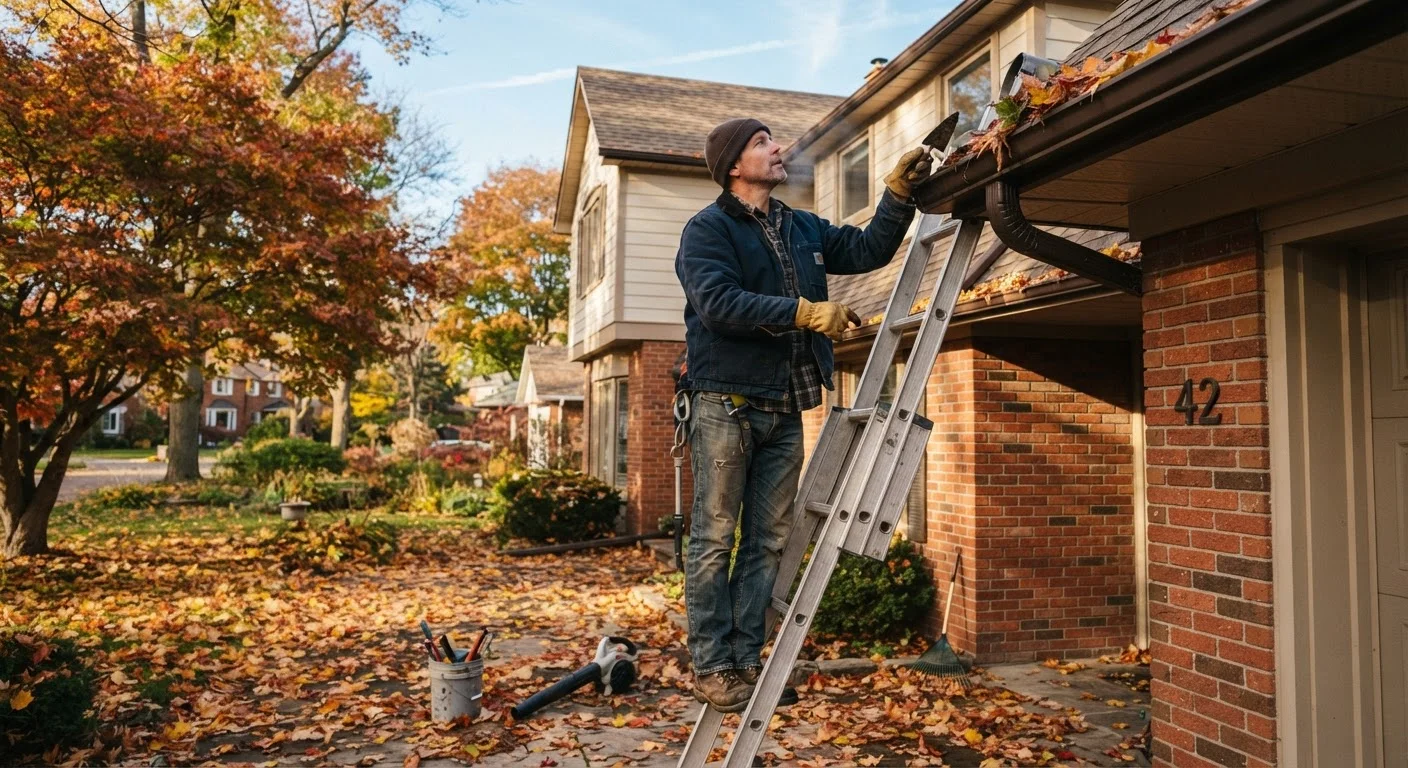
Winter debris - decomposed leaves, twigs, and accumulated grit - can obstruct gutters and downspouts as spring rains arrive. Blocked drainage forces water toward your roofline and foundation, two repair categories that can reach into the thousands of dollars.
Walk the perimeter of your home and look for sagging sections, separated joints, or visible blockages. Clear gutters by hand or with a scoop tool, then flush them with a garden hose to confirm water flows freely through each downspout. Make sure downspout extensions direct water at least three feet away from the foundation.
While you're up there, scan the roofline for missing, cracked, or lifted shingles that winter weather may have loosened. Catching a damaged shingle early is a minor fix; discovering a water-damaged ceiling is not.
Blocked gutters channel water toward your foundation - one of the most expensive repair scenarios a homeowner faces.
Spring: Test smoke and carbon monoxide detectors
Detector batteries drained quietly over the winter, and the heating season - when carbon monoxide risks are elevated - is wrapping up. Spring is an ideal moment to test every unit in the home and replace batteries proactively, regardless of whether a low-battery chirp has started.
Press and hold the test button on each detector until it sounds. Units that don't respond, respond faintly, or are more than 10 years old should be replaced. Carbon monoxide detectors have a separate lifespan from smoke detectors - check the manufacture date printed on the back of each unit.
This task costs almost nothing and takes under 15 minutes for an entire home. The alternative - a non-functional detector - presents risks that go well beyond the financial.
A non-functioning detector is one of the most dangerous - and easiest to prevent - household oversights.
Summer: Service your HVAC system before peak cooling demand
Air conditioning systems that haven't been serviced can struggle once summer heat arrives, leading to reduced efficiency, higher utility bills, and - at worst - a complete breakdown during the hottest stretch of the year when repair wait times are longest.
Start with the tasks you can handle yourself: replace or clean the air filter (a clogged filter makes the system work harder and shortens its life), clear vegetation and debris from around the outdoor condenser unit, and make sure indoor vents are unobstructed by furniture. A clean, unblocked system runs more efficiently and lasts longer.
For a more thorough check - refrigerant levels, electrical connections, coil cleaning - schedule a professional HVAC inspection in late spring before demand spikes. Many contractors offer lower rates outside peak season. This is also a good time to check that caulking around window frames is intact, which reduces the cooling load on the system.
Replacing an air filter is a five-minute task that measurably extends the life of an HVAC system.
Fall: Flush the water heater to remove sediment
Over time, minerals in tap water settle at the bottom of a standard tank water heater. This sediment layer forces the heating element to work harder, shortens the unit's lifespan, and can cause the rumbling or popping sounds some homeowners notice. A water heater that should last 10-12 years can fail years early without periodic flushing.
Before attempting this, turn off the power supply (for electric units) or set the gas valve to pilot (for gas units), then allow the water to cool for safety. Attach a garden hose to the drain valve, direct the hose to a floor drain or bucket, and open the valve to flush until the water runs clear. Consult your water heater's manual or a licensed plumber if you're unsure about the process for your specific unit - particularly if the heater is older and the drain valve may be corroded.
Fall is also a good time to check the pressure relief valve, a critical safety component. If it hasn't been tested in years, have a licensed plumber evaluate it.
Sediment buildup is a silent water heater killer - an annual flush adds years to the unit's life.
Fall: Check weatherstripping and door seals
Gaps around exterior doors and windows allow conditioned air to escape and outside air to infiltrate - a consistent drain on heating and cooling costs. Weatherstripping is inexpensive, widely available, and one of the more straightforward DIY replacements a homeowner can tackle.
On a windy day, hold your hand near door frames and window edges to feel for drafts. Inspect the rubber or foam stripping for compression, cracking, or visible gaps. Door sweeps - the seal along the bottom of exterior doors - are another common failure point. Replacing worn weatherstripping or a damaged door sweep typically takes under 30 minutes per door and requires only scissors or a utility knife.
This task is worth doing before heating season begins. Sealing drafts is one of the most cost-effective ways to reduce energy consumption over the winter months, and it also keeps moisture infiltration in check. See our guide to caulk and sealant for complementary tasks around windows and trim.
A worn door sweep costs a few dollars to replace and can noticeably reduce heat loss all winter.
Winter: Clean the dryer vent to prevent fire hazards
Lint that bypasses the dryer's internal filter gradually accumulates in the exhaust vent duct over the course of a year. A heavily clogged dryer vent is a recognized fire hazard and also causes the dryer to run longer cycles, using more energy and stressing the appliance's components.
Disconnect the dryer from the exhaust duct (typically a flexible metal or foil tube), and use a dryer vent brush kit - a long, flexible brush designed for the purpose - to clean the full length of the duct from inside. Clear the exterior vent cap as well, making sure the flap opens freely. Signs that the vent needs attention include clothes taking longer than one cycle to dry, excessive heat in the laundry room, or a burning smell during operation.
This is also a good reminder to check other often-overlooked household systems on a schedule. Our guide to building a home maintenance schedule can help you organize recurring tasks like this one so nothing slips through.
Dryer vent cleaning is one of the most underrated fire-prevention tasks in a home.
Keep a simple home maintenance log
A notebook or a shared digital document where you record what was done and when can save significant time and money. It helps you track appliance ages, recall when filters were last changed, and provide documentation if you ever sell the home. Even a basic spreadsheet with dates and task descriptions is far better than relying on memory.
Building a rhythm that actually holds
The difference between homeowners who catch problems early and those who face expensive surprises is rarely expertise - it's consistency. A simple approach: at the start of each season, spend 15 minutes reviewing your home's key systems. Use a recurring calendar reminder if that helps. Many of the tasks above can be bundled into a single half-day effort per season.
For a fuller picture of year-round home care - including easily overlooked systems like water heaters and dryer vents - see our related article on seasonal tasks most people forget until something goes wrong. The goal isn't perfection; it's staying informed and acting before small problems compound into large ones.