
Nutrition Labels Decoded: What the Numbers on Packaged Food Actually Tell You

| Label Regulator | U.S. Food and Drug Administration (FDA) |
| Last Major Label Overhaul | 2016 (updated serving sizes, added 'Added Sugars' line) (FDA Nutrition Facts Label Update) |
| Reference Calorie Level for %DV | 2,000 calories per day (FDA standard reference amount) |
| %DV Threshold: Low | 5% or less per serving (FDA consumer guidance) |
| %DV Threshold: High | 20% or more per serving (FDA consumer guidance) |
| Foods Exempt from Label Requirement | Plain meat, poultry, most restaurant food, and very small packages (FDA labeling regulations) |
Why Nutrition Labels Exist - and What They Actually Cover
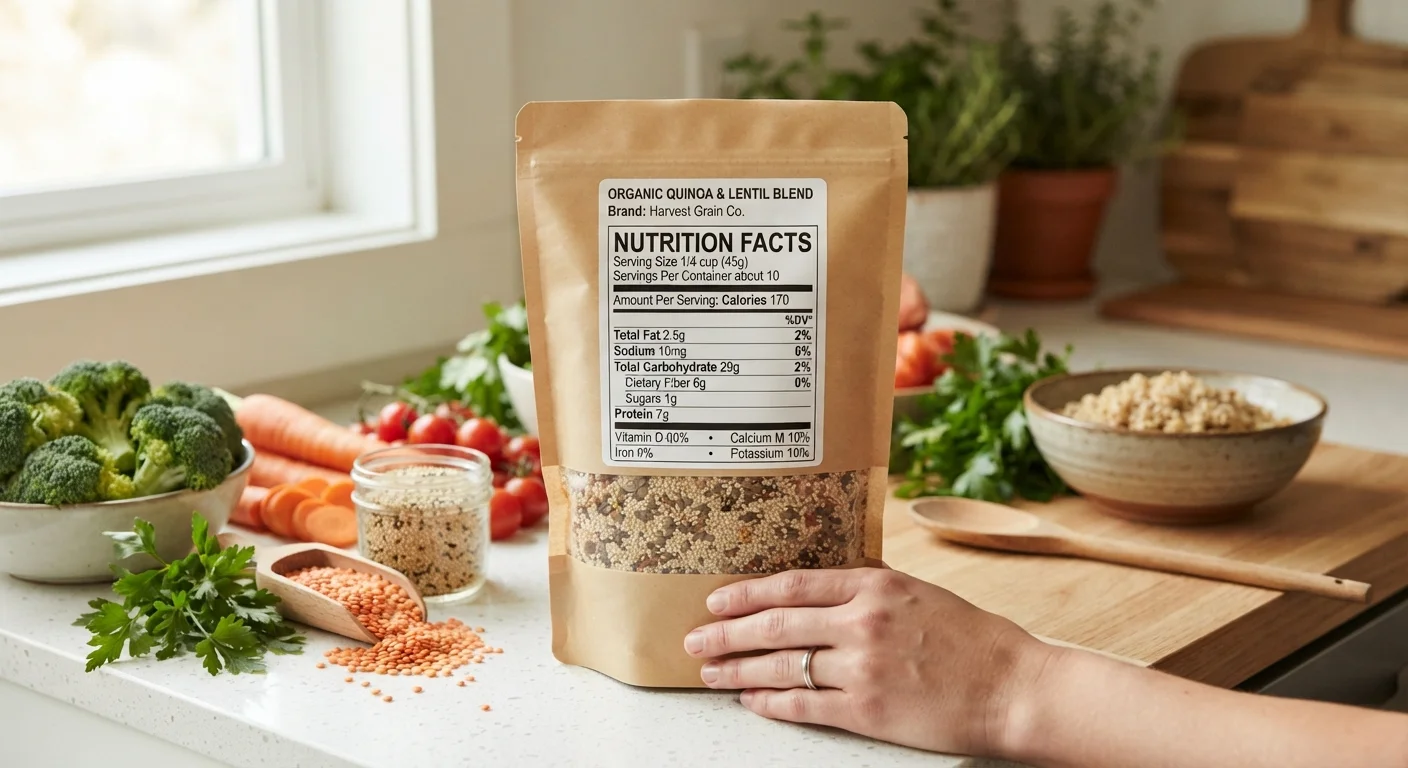
The Nutrition Facts label is a federally standardized panel required on most packaged foods sold in the United States, regulated by the Food and Drug Administration (FDA). Its purpose is straightforward: give consumers consistent, comparable information so they can make informed choices. But crammed into that small box is a surprising amount of nuance.
At the top, you'll always find serving size - the amount the entire label refers to. This is one of the most important lines on the panel, because every number below it - calories, grams of fat, percentages - is calculated based on that serving. If you eat twice the listed serving, you consume roughly twice those amounts.
Serving sizes were updated in 2016 to reflect amounts people actually eat, rather than idealized portions. A serving of ice cream, for example, changed from half a cup to two-thirds of a cup. Knowing this helps you compare labels more realistically. For a deeper look at how macronutrients like protein, carbs, and fat function in your body, see our plain-language macronutrients guide.
| Label Regulator | U.S. Food and Drug Administration (FDA) |
| Last Major Label Overhaul | 2016 (updated serving sizes, added 'Added Sugars' line) (FDA Nutrition Facts Label Update) |
| Reference Calorie Level for %DV | 2,000 calories per day (FDA standard reference amount) |
| %DV Threshold: Low | 5% or less per serving (FDA consumer guidance) |
| %DV Threshold: High | 20% or more per serving (FDA consumer guidance) |
| Foods Exempt from Label Requirement | Plain meat, poultry, most restaurant food, and very small packages (FDA labeling regulations) |
Reading the Numbers: Calories, Nutrients, and Daily Values
Below serving size, calories appear in large type. Calories measure the energy a food provides. They matter in context - a calorie from almonds behaves differently in the body than one from refined sugar - but the label itself doesn't distinguish between sources, which is why reading further down is essential.
The nutrient section lists fats (total, saturated, and trans), cholesterol, sodium, total carbohydrates (including dietary fiber, total sugars, and added sugars), and protein, followed by select vitamins and minerals. Pay particular attention to added sugars, a line added in the FDA's 2016 update. This figure distinguishes sugars naturally present in food from those manufacturers put in during processing - a meaningful distinction for understanding a product's nutritional profile.
To the right of most nutrients, you'll see a % Daily Value (%DV). This percentage tells you how much a nutrient in one serving contributes to a recommended daily intake, based on a 2,000-calorie reference diet. As a general guideline from nutrition researchers: 5% DV or less is considered low for a nutrient; 20% DV or more is considered high. This makes %DV a useful tool for quickly comparing products - even without doing any math.
Serving Size
The standardized amount of food that all other label numbers refer to. It reflects a typical portion based on consumption data, not necessarily a recommended amount to eat.
% Daily Value (%DV)
The percentage of a nutrient's recommended daily intake provided by one serving, calculated against a 2,000-calorie reference diet. It helps you gauge whether a food is high or low in a given nutrient.
Added Sugars
Sugars and syrups added to food during processing or preparation, as opposed to sugars naturally found in fruit or dairy. They are listed separately on modern labels to help consumers identify heavily sweetened products.
Saturated Fat
A type of fat, solid at room temperature, found in animal products and some plant oils. Dietary guidelines generally recommend limiting saturated fat, as high intake is associated with elevated LDL cholesterol in research literature.
Trans Fat
An industrially produced fat created through partial hydrogenation of oils. The FDA has largely phased out artificial trans fats from U.S. food supply, but trace amounts may still appear on some labels.
Dietary Fiber
A form of carbohydrate found in plants that the body cannot fully digest. Fiber supports digestive health and is considered a nutrient to seek in adequate amounts according to U.S. dietary guidelines.
Nutrients to keep lower (saturated fat, sodium, added sugars) are listed first in their sections; nutrients to seek out (fiber, vitamins, minerals) appear lower. Understanding this structure helps you scan labels faster.
This article provides general nutrition education and is not a substitute for personalized dietary advice from a registered dietitian or healthcare provider.