

Key Takeaways
- Thirst is not a reliable early signal - mild dehydration often sets in before you feel thirsty.
- Foods like cucumbers, watermelon, and leafy greens can meaningfully contribute to daily fluid intake.
- Caffeine, heat, physical activity, and certain medications all increase your body's fluid needs.
- Urine color remains one of the simplest, most accessible indicators of hydration status.
- Electrolyte balance - not just water volume - determines how well your body actually uses fluids.
Why Hydration Is More Nuanced Than You Think
Most people know they should drink more water - but knowing and doing are two very different things. What's less commonly understood is that hydration isn't a single number you hit and move on. It's a dynamic process shaped by what you eat, how active you are, where you live, and even how well you slept the night before.
The familiar "eight glasses a day" guideline is a rough starting point, not a universal prescription. Research published by institutions such as the National Academies of Sciences suggests that adequate fluid intake varies considerably by age, sex, body size, and activity level. Rather than chasing a fixed target, building a few smarter habits tends to serve people better over time.
Below are some of the hydration habits that often get overlooked - practical shifts that can make a real difference in how your body functions day to day. As always, if you have specific health concerns or are managing a chronic condition, speak with a qualified healthcare professional about what's right for you.
Start tracking urine color, not ounces
Rather than counting cups, your urine color offers a more direct window into your hydration status. Pale yellow generally signals adequate hydration; dark amber or honey-colored urine is a common indicator that your body needs more fluid. Colorless urine, on the other hand, may suggest you're over-hydrating - which, while less common, is worth noting.
This method isn't perfect - certain vitamins and foods can alter urine color - but it's a practical, accessible cue that many people overlook entirely.
Urine color is a more direct hydration signal than counting daily glasses.
Account for water from food, not just drinks
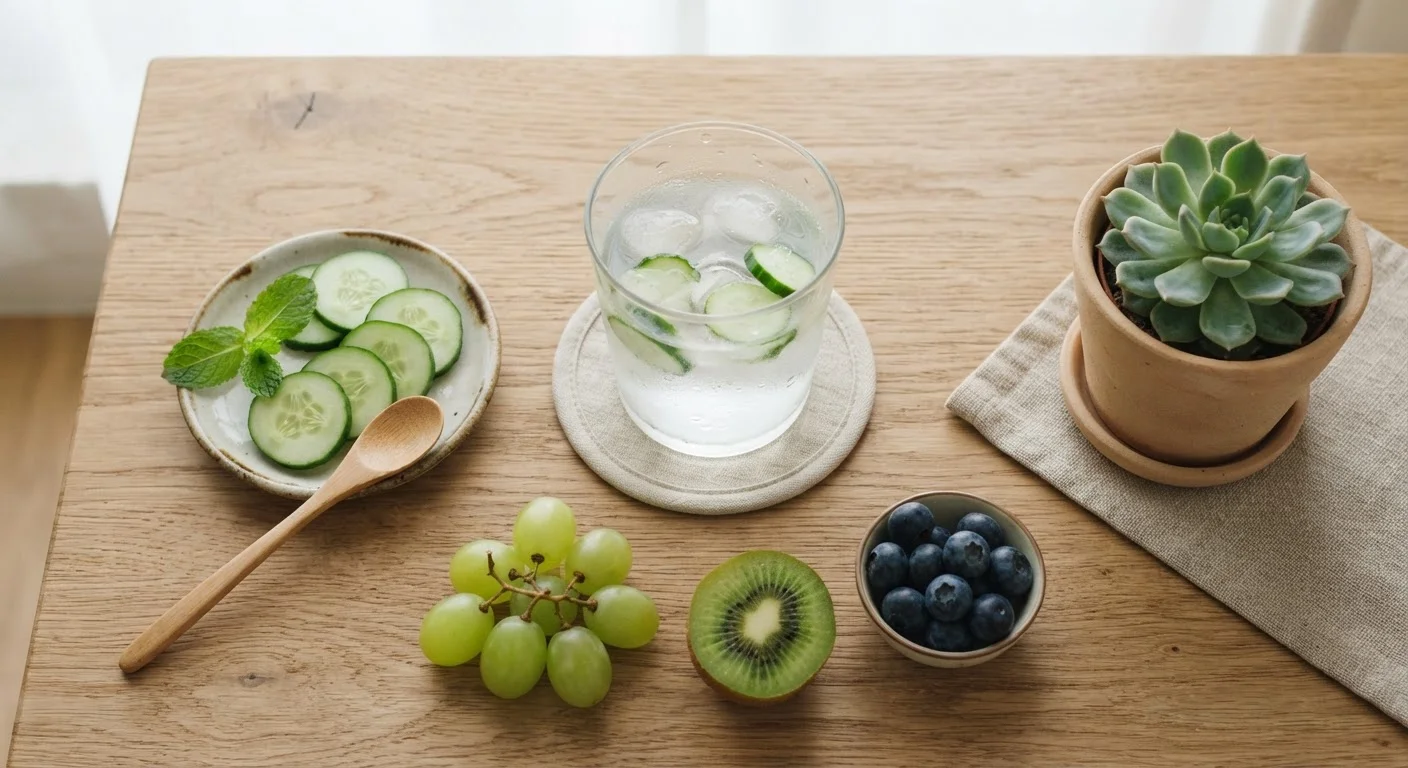
Roughly 20% of daily fluid intake can come from food, according to general dietary guidance. Fruits and vegetables with high water content - such as cucumbers, celery, watermelon, strawberries, and leafy greens - contribute meaningfully to overall hydration. Soups and broths are another often-underestimated source.
This doesn't mean you can skip drinking water, but recognizing food as part of the equation helps you build a more complete picture of your daily intake.
Up to 20% of daily fluid intake can come from water-rich foods, not beverages.
Adjust for heat, exercise, and environment
Your baseline fluid needs shift with circumstances. Hot or humid weather, physical activity, high altitudes, and even heated indoor environments in winter can all increase how much fluid your body loses through sweat and respiration. Many people maintain summer drinking habits year-round without realizing that their needs have changed.
A simple habit: drink a glass of water before and after any physical activity, and consider increasing intake on days with significant heat exposure - even if you don't feel particularly thirsty.
Heat and exercise shift your fluid needs significantly - often before thirst kicks in.
Don't rely on thirst alone as your signal
Thirst is genuinely useful, but it's a lagging indicator. Research suggests that by the time you feel thirsty, you may already be mildly dehydrated. This gap tends to widen with age, as the thirst mechanism becomes less sensitive over time - making proactive habits especially important for older adults.
Building gentle environmental cues - keeping a glass of water on your desk, drinking a glass before each meal, or setting a mid-morning reminder - can help you stay ahead of the sensation rather than reacting to it.
Thirst is a lagging signal - mild dehydration can develop before you feel it.
Understand how caffeine and alcohol affect fluid balance
Caffeinated beverages like coffee and tea do contribute to your fluid intake, and moderate consumption is not the significant dehydrating force it's sometimes portrayed to be. However, alcohol does have a diuretic effect, meaning it increases urine output and can contribute to fluid loss - particularly in larger amounts.
A practical approach: pair alcoholic drinks with water, and be mindful that relying heavily on caffeinated drinks in place of plain water may not fully compensate for your body's hydration needs throughout the day.
Alcohol has a diuretic effect; pairing it with water helps offset fluid losses.
Pay attention to electrolytes, not just water volume
Water is essential, but hydration at the cellular level depends on electrolyte balance - particularly sodium, potassium, and magnesium. Drinking large amounts of plain water without adequate electrolytes can, in some circumstances, dilute the body's sodium levels. This is uncommon in everyday life but more relevant during prolonged, intense exercise or illness involving significant fluid loss.
For most people, a balanced diet rich in vegetables, fruits, and whole foods provides sufficient electrolytes. If you're engaging in extended exercise or recovering from illness, a healthcare professional can advise on whether additional support is appropriate.
Hydration isn't just about water volume - electrolyte balance determines how your body uses fluids.
Small Shifts, Meaningful Results
Hydration habits don't require an overhaul of your entire routine. Many of the most effective changes are subtle - paying closer attention to your body's signals, adjusting for the season, or simply eating more water-rich foods. These small, consistent practices build on one another over time.
Build Hydration Into Existing Routines
One of the most effective strategies is habit stacking - linking water intake to things you already do. Try drinking a glass of water when you wake up, before each meal, and before bed. These anchor points add up without requiring conscious effort throughout the day, making consistency far easier to sustain.
If you're curious about how other overlooked daily habits support your overall wellbeing, our article on daily habits that support emotional resilience explores how small routines can quietly strengthen both body and mind.
This article is for general informational purposes only and does not constitute medical advice. Always consult a qualified healthcare professional for guidance tailored to your individual health needs.