
Mindfulness Meditation and Deep Breathing: Two Paths to Calming the Nervous System

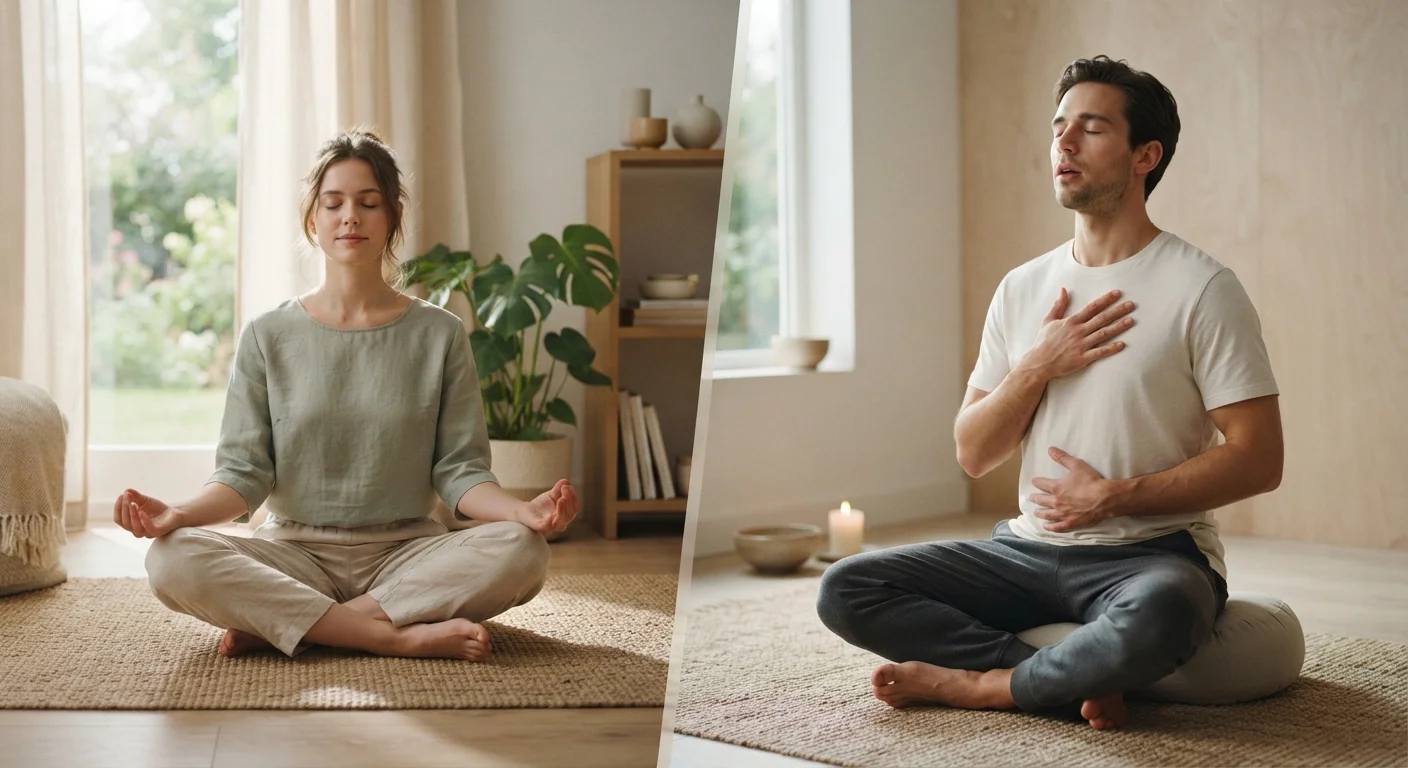
Key Takeaways
- Both practices activate the parasympathetic nervous system, reducing the body's stress response.
- Deep breathing delivers faster physiological relief, making it practical for immediate stressful moments.
- Mindfulness meditation builds cumulative emotional awareness and resilience with regular practice over time.
- The two approaches are complementary - many people benefit from using both depending on the situation.
- Neither replaces professional mental health support when symptoms are persistent or severe.
Option A
Mindfulness Meditation
The sustained, awareness-building practice.
Best for: People who want to develop long-term emotional regulation and a changed relationship with their thoughts over time.
Option B
Deep Breathing
The quick, physiologically direct stress relief tool.
Best for: Anyone needing immediate, in-the-moment relief from acute stress or anxiety with no prior training required.
If you need to calm down quickly in a stressful moment
Deep Breathing
Controlled breathing slows the heart rate and activates the body's relaxation response within minutes, requiring no prior experience or quiet setting.
If you want to build long-term emotional resilience
Mindfulness Meditation
Regular mindfulness practice gradually reshapes how the brain processes stress and emotion, with research suggesting measurable benefits after consistent weeks of practice.
If you're new to stress management and unsure where to start
Deep Breathing
It requires no equipment, instruction, or dedicated time - a few slow, intentional breaths can be done anywhere and still offer a meaningful calming effect.
If you experience recurring anxious thoughts or emotional reactivity
Mindfulness Meditation
Mindfulness trains the ability to observe thoughts without being swept up in them, which can reduce the cycle of anxious rumination over time.
If you want a flexible, dual approach to daily wellbeing
Mindfulness Meditation
Many mindfulness practices naturally incorporate breath awareness, offering both immediate and longer-term benefits within a single routine.
How Each Practice Works on the Nervous System
When stress hits, the body's sympathetic nervous system - often called the "fight-or-flight" system - ramps up. Heart rate rises, breathing shallows, and stress hormones like cortisol flood the bloodstream. Both mindfulness meditation and deep breathing work against this response, but they take meaningfully different routes to get there.
Deep breathing engages the vagus nerve directly. Slow, controlled exhales send a signal to the brain that it is safe to relax, prompting the parasympathetic nervous system - the body's "rest and digest" mode - to take over. This happens quickly, often within just a few breath cycles, making it one of the most immediate physiological tools available for stress relief.
Mindfulness meditation works more gradually. Rather than targeting the body's hardware directly, it trains the mind's relationship with stressful thoughts and sensations. Over time and with consistent practice, research suggests it may influence how the brain's prefrontal cortex and amygdala interact - essentially helping the brain become less reactive to perceived threats. To understand how chronic versus acute stress differs in the first place, see our guide to different types of stress.
| Criterion | Mindfulness Meditation | Deep Breathing |
|---|---|---|
| Speed of effect | Gradual, builds over weeks | Within minutes or even seconds |
| Learning curve | Moderate - guidance helpful early on | Very low - intuitive to learn |
| Time commitment | 10-20 minutes of dedicated practice | 1-5 minutes as needed |
| Setting required | Quiet, distraction-free space preferred | Anywhere, anytime |
| Primary mechanism | Trains attention and emotional awareness | Activates parasympathetic nervous system directly |
| Best evidence for | Anxiety, depression, emotional regulation | Acute stress, heart rate reduction |
| Equipment needed | None (apps optional) | None |
Practical Differences: Time, Setting, and Learning Curve
One of the most important distinctions between these two practices is accessibility. Deep breathing has almost no learning curve. Techniques like diaphragmatic breathing or the 4-7-8 method (inhale for four counts, hold for seven, exhale for eight) can be understood and applied in under a minute. You can use them at your desk, in a parked car, or before a difficult conversation.
Mindfulness meditation, by contrast, typically asks more of you upfront. Most people find it helpful to start with guided sessions - through apps, audio recordings, or a class - and to set aside a consistent daily window, even if that's only ten minutes. The early weeks can feel frustrating; it's common to feel like you're "doing it wrong" when thoughts wander. That wandering, though, is not failure - noticing it and gently redirecting attention is the practice itself.
You Don't Have to Choose Just One
Many mindfulness meditation practices already incorporate breath awareness as a core anchor, meaning the two approaches are naturally compatible. Starting a session with a few intentional deep breaths before shifting into broader mindful awareness can make both practices feel more accessible. Experiment to find what rhythm works for your schedule and temperament - there is no single correct combination.
Both practices can be woven into daily habits that support emotional resilience, making them more sustainable over the long term.
Which Approach Fits Which Situation?
Think of deep breathing as a first-response tool and mindfulness as a longer-term training program - not unlike the difference between an ice pack for a sprained ankle and a physical therapy regimen to prevent future injury.
Use deep breathing when:
- You're in an acute stressful moment (a tense meeting, a difficult phone call)
- You need to fall back asleep after waking anxious in the night
- You want a quick reset between tasks during a busy day
Consider building a mindfulness practice when:
- You notice recurring patterns of anxious thinking or emotional reactivity
- You want to improve your general sense of awareness and present-moment focus
- You're interested in the connection between chronic stress and physical health
8 weeks
Typical duration for measurable mindfulness benefits
Research published in journals including Psychiatry Research has found structural and functional brain changes after approximately eight weeks of regular mindfulness-based stress reduction (MBSR) practice.
~60 sec
Time for deep breathing to slow heart rate
Studies on slow paced breathing (around 5-6 breaths per minute) show measurable reductions in heart rate and blood pressure within as little as one minute, according to cardiovascular physiology research.
Neither approach is a substitute for professional mental health support. If stress or anxiety feels persistent, disruptive, or overwhelming, speaking with a qualified mental health professional is always the right step. You can also explore how to recognize when stress has crossed into concerning territory.
This article is for informational and educational purposes only and does not constitute medical or mental health advice. Always consult a qualified healthcare or mental health professional regarding your individual circumstances.