
Key Takeaways
- Sampling is a deliberate creative act rooted in hip-hop's DJ and breakbeat culture.
- Two separate copyrights - the composition and the master recording - must typically be cleared.
- Landmark court cases like Bridgeport v. Dimension Films changed how producers approach even tiny samples.
- Modern producers use interpolation and replay as legal alternatives to direct sampling.
- Streaming royalty structures make uncleared samples riskier and costlier than ever before.
What Sampling Actually Is
At its most fundamental, sampling means taking a portion of an existing sound recording - a drum hit, a bass line, a chord progression, even a single breath - and reusing it in a new composition. It is not covering a song; it is lifting the actual recorded audio from the original track and weaving it into something new.
The practice sits at the intersection of technology, creativity, and cultural conversation. Early hip-hop producers worked with reel-to-reel tape and turntables; today's beatmakers use digital audio workstations (DAWs) capable of slicing a one-second clip into dozens of layered pieces. The tools have changed radically, but the underlying idea - honoring and transforming source material - has not.
Sampling is also one reason hip-hop is so deeply connected to music history. A single track might contain nods to funk, soul, jazz, rock, and gospel all at once. For curious listeners who want to trace those connections, it's worth checking out this honest guide to jazz - many classic hip-hop samples draw directly from jazz's rhythmic vocabulary.
The Cultural Roots: Crate Digging and the DJ Tradition
Sampling did not emerge from studios - it grew out of block parties in the South Bronx. DJs like Kool Herc pioneered the breakbeat technique in the early 1970s, isolating the percussive instrumental breaks on funk and soul records and looping them using two turntables. Dancers - soon called B-boys and B-girls - waited specifically for those moments.
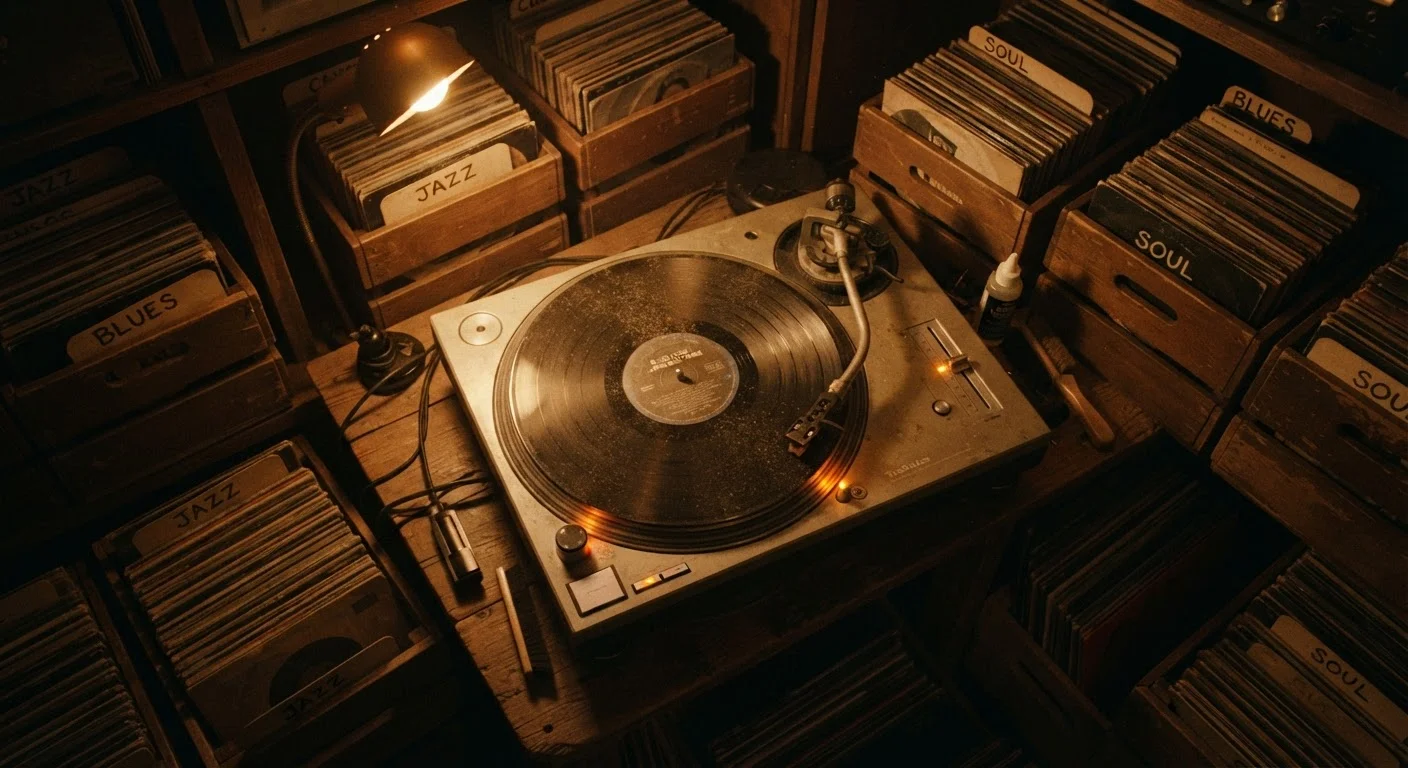
Crate digging became its own subculture: producers and DJs haunting thrift stores, flea markets, and record shops hunting for obscure grooves no one else had found yet. Owning a rare pressing of a Melvin Van Peebles soundtrack or an obscure Brazilian bossa nova record gave a producer creative currency.
When building a sample-based beat, listen to the full original album - not just the track you're flipping. Adjacent songs often contain drum fills, chord variants, or bass lines that layer perfectly with your main sample.
Producers like J Dilla and Pete Rock were known for sampling multiple moments from the same record session, creating cohesion that listeners feel even without recognizing the source.
Before committing to a sample, research its ownership history. Some recordings have been bought, sold, or disputed multiple times, meaning the entity you need to clear with today may not be the label name on the sleeve.
Music catalog acquisitions have accelerated significantly; approaching clearance without current ownership information is a common and costly mistake for independent producers.
This ethos of deep listening and historical knowledge is still valued. Artists who can identify source material, understand its original context, and then transform it demonstrate a musicality that casual listeners often sense without being able to name. It connects directly to what going deeper with an artist's catalog looks like in practice.
Iconic Samples That Shaped Hip-Hop
Some samples are so embedded in hip-hop's DNA that hearing the original source feels like meeting an ancestor. A few landmark examples illustrate how transformative the practice can be:
- James Brown's "Funky Drummer" (1970) - The drum break performed by Clyde Stubblefield became arguably the most sampled rhythmic moment in recorded music, appearing on tracks across multiple decades and genres.
- The Winstons' "Amen, Brother" (1969) - The six-second "Amen break" from this track became foundational not only to hip-hop but to drum-and-bass and jungle, illustrating how one moment can ripple across genres.
- Isaac Hayes' orchestral arrangements - Lush string sections and wah-wah guitar riffs from Hayes' recordings gave countless hip-hop producers a cinematic canvas to work with.
6 sec
Length of the most sampled break in history
The "Amen break" from The Winstons' 1969 track is estimated to have appeared in thousands of recordings across hip-hop, drum-and-bass, and electronic music.
2
Copyrights typically requiring clearance per sample
Producers must usually license both the underlying composition (songwriter) and the master recording (usually the label) independently.
$0-$150K+
Typical sample clearance fee range
Fees vary enormously based on the prominence of the source, how much is used, and the negotiating leverage of each party - there is no regulated rate.
These examples show sampling functioning as cultural dialogue - a new generation speaking directly to the musicians who inspired them. That cross-genre conversation is also central to how modern artists dissolve genre boundaries more broadly.
The Legal Landscape: Clearance, Copyright, and Court Cases
This is where the art form runs headlong into intellectual property law. When a producer samples a recording, they are potentially infringing on two separate copyrights:
- The composition copyright - owned by the songwriter(s) or their publisher, covering the underlying melody and lyrics.
- The master recording copyright - typically owned by the record label that financed the original recording session.
Both must usually be licensed - a process called clearance. Rights holders set their own fees, which can run from a few thousand dollars to six figures per sample, and they are under no legal obligation to grant a license at all. Labels have blocked releases entirely when clearance was refused.
Two Rights, Two Negotiations
Many producers are surprised to learn that getting permission from a songwriter is not enough - and vice versa. The master recording and the composition are legally distinct, often held by completely different entities. Clearing only one and releasing the track anyway is one of the most common - and expensive - mistakes in independent music production. Both rights must be addressed before commercial release.
The 2001 federal appeals court ruling in Bridgeport Music, Inc. v. Dimension Films is frequently cited as a turning point. The court determined that any recognizable sample of a sound recording - no matter how brief - requires a license, rejecting the informal "de minimis" defense that had given some producers cover for tiny lifts. Producers, attorneys, and scholars continue to debate this ruling's scope and fairness.
The Craft: How Producers Flip a Sample
Clearing a sample is expensive; many independent producers simply cannot afford it. This economic reality has pushed hip-hop's creative vocabulary forward in unexpected ways. Common techniques include:
- Chopping - slicing a sample into individual notes or hits and rearranging them into an entirely new melodic or rhythmic pattern.
- Pitching and time-stretching - altering the original tempo or key so the sample sits in a new context.
- Layering - combining multiple samples so no single source is clearly identifiable.
- Interpolation - re-recording the melody or riff with live musicians, which only requires clearing the composition copyright, not the master.
Know Your Source, Respect the History
The most celebrated hip-hop producers don't just sample - they study. Understanding who played on a record, who wrote it, and what cultural moment it came from deepens the creative act and often shows up in the finished track. Listeners who recognize the reference feel the connection; even those who don't often sense a richness they can't quite name.
The goal is rarely to hide where the music came from - among knowledgeable listeners, identifying a source sample is a mark of respect and shared history. The craft lies in how much creative distance a producer travels between the original and the finished beat.
Sampling's Future in a Streaming World
Streaming platforms complicate sampling further. An uncleared sample on a Spotify or Apple Music release exposes a track to automated content identification systems - similar to the Content ID system YouTube uses - which can route royalties away from the credited artist or pull the song from the platform entirely. For major-label artists, legal teams handle clearances before release; for independent artists, the stakes of getting it wrong are steeper than ever.
At the same time, a growing licensing ecosystem has emerged. Platforms now exist that offer pre-cleared sample packs, and some rights holders have become more open to licensing for a percentage of royalties rather than a flat fee, aligning their incentives with the new track's commercial success. AI-assisted music tools are also generating new debates: if a model trained on copyrighted recordings produces a sound, is that a sample? Courts and legislatures are only beginning to grapple with the question.
Sampling will not disappear from hip-hop. The culture's commitment to excavating and honoring musical history is too deep. But the practitioners who navigate this space most successfully will continue to be those who understand the law as clearly as they understand the groove.
“Sampling isn't theft - it's a conversation across time. Every loop is a producer saying: I heard what you did, and I want to carry it somewhere new.”
— Questlove, Drummer, producer, and musical director of The Roots