

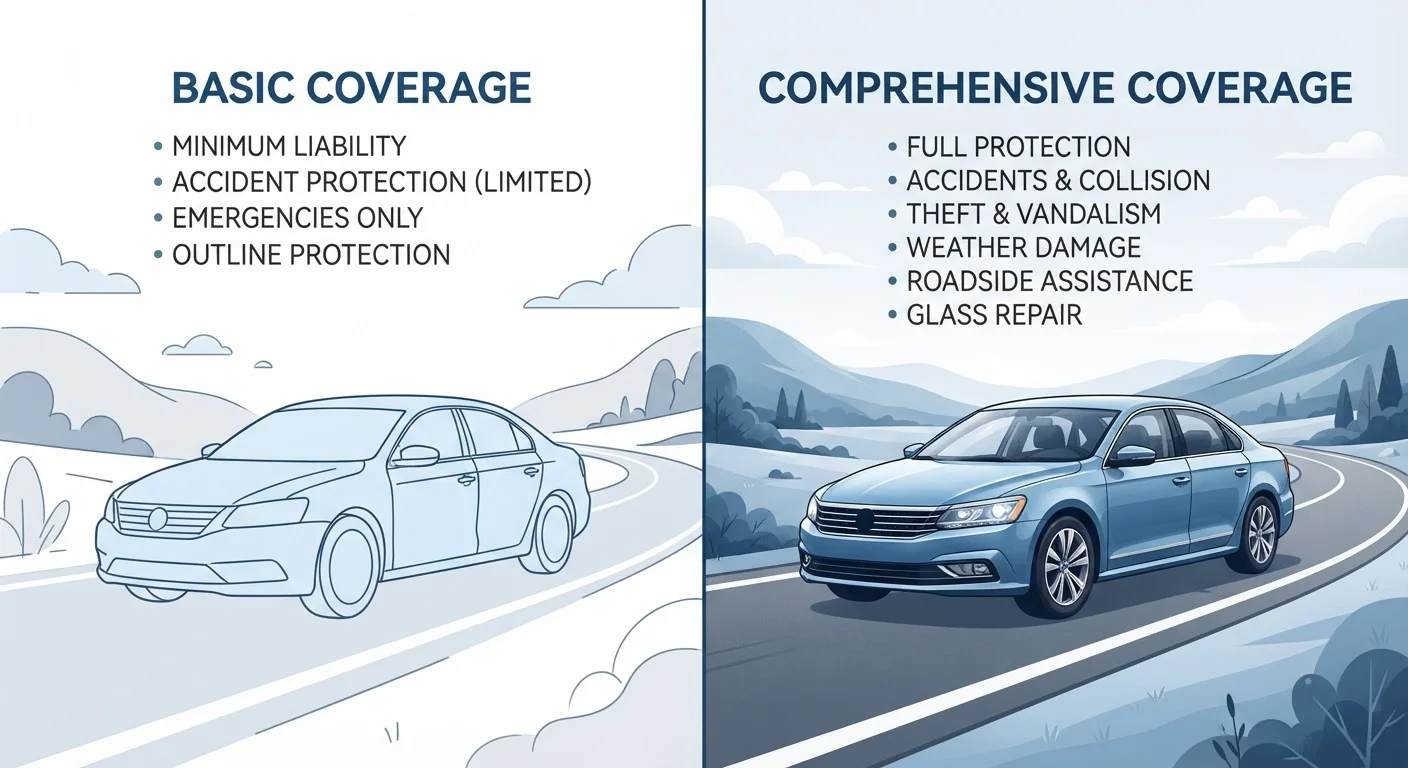
Key Takeaways
- Liability coverage is required by law in nearly every US state and pays for damage you cause to others.
- Full coverage combines liability with collision and comprehensive, protecting your own vehicle too.
- Lenders typically require full coverage on financed or leased vehicles.
- The right choice depends on your vehicle's value, your savings, and your personal risk tolerance.
- Full coverage costs more upfront but can prevent significant financial loss after an accident or theft.
Option A
Liability-Only Coverage
The legally required minimum that protects others, not your vehicle.
Best for: Drivers of older, lower-value vehicles who can absorb out-of-pocket repair or replacement costs.
Option B
Full Coverage
Broader protection that also covers damage to your own vehicle.
Best for: Drivers with newer, financed, or higher-value vehicles who want protection against a wider range of losses.
If you drive an older vehicle worth less than a few thousand dollars
Liability-Only Coverage
When a car's market value is low, comprehensive and collision premiums may exceed what you'd receive in a payout, making the extra cost difficult to justify.
If you're financing or leasing your vehicle
Full Coverage
Lenders and lessors almost universally require full coverage to protect their financial interest in the vehicle for the duration of the loan or lease.
If you have limited savings to cover unexpected repair or replacement costs
Full Coverage
Without collision or comprehensive protection, a serious accident or theft could mean a large out-of-pocket expense that many households aren't positioned to absorb.
If your vehicle is paid off and you have solid emergency savings
Liability-Only Coverage
Drivers who can self-insure the cost of their car may find that dropping to liability-only offers meaningful premium savings over time.
What Each Coverage Type Actually Means
Auto insurance can feel like a maze of terms, but the liability vs. full coverage distinction is one of the most consequential decisions a driver makes. Understanding what each policy actually covers - and what it doesn't - is the starting point. For a broader breakdown of coverage categories, see what your car insurance policy actually covers.
Liability coverage pays for bodily injury and property damage you cause to other people in an accident. It does not cover damage to your own vehicle or your own medical expenses. Every state except New Hampshire requires some minimum level of liability insurance, though the required minimums vary significantly by state.
Full coverage is an informal industry term - not a single policy type. It typically refers to a combination of liability, collision, and comprehensive coverage. Collision coverage pays for damage to your car resulting from a crash, regardless of fault. Comprehensive coverage pays for non-collision damage: theft, fire, hail, falling objects, flooding, and similar events. Together, these three components address a much broader range of financial risks.
| Criterion | Liability-Only | Full Coverage |
|---|---|---|
| Covers damage to others | Yes | Yes |
| Covers your own vehicle damage | No | Yes (collision) |
| Covers theft or weather damage | No | Yes (comprehensive) |
| Required by law | Minimum required | Required by lenders |
| Typical premium cost | Lower | Higher |
| Best vehicle age fit | Older, lower-value | Newer, higher-value |
Key Factors That Should Influence Your Decision
Neither option is universally right. The appropriate coverage level depends on several converging factors specific to your situation.
Your Vehicle's Current Market Value
A commonly cited rule of thumb is to reconsider collision and comprehensive coverage when the combined annual premium for those add-ons approaches or exceeds 10% of the car's actual cash value. Since insurers pay claims based on market value - not what you paid or what repairs cost - an older vehicle with a low market value may generate a modest payout even after a total loss. Keep in mind that insurance payouts after a covered loss are also reduced by your deductible.
Whether You Have a Loan or Lease
If a lender or leasing company has a financial stake in your vehicle, they will almost certainly require full coverage for the life of the agreement. This is non-negotiable in most contracts. Carrying only liability on a financed vehicle would violate your loan terms and could result in the lender force-placing insurance at a much higher cost.
Your Financial Cushion
Consider honestly what you could afford to pay out of pocket if your car were totaled or stolen tomorrow. Drivers with robust emergency savings may be comfortable self-insuring their vehicle. Those without that buffer face real financial risk if an uninsured loss occurs. Insurance is, at its core, a tool for managing financial risk - not a one-size-fits-all product. Auto insurance is also just one component of the broader cost of ownership; the real cost of owning a car beyond the sticker price covers the full picture.
Common Misconceptions About Full Coverage
Many drivers assume full coverage means every possible loss is covered - it doesn't. Rental reimbursement, roadside assistance, and gap insurance are typically separate add-ons. For a closer look at what standard policies do and don't include, see auto insurance myths that could leave you underprotected. If you're financing a new vehicle, gap insurance is also worth understanding.
This article provides general educational information about auto insurance coverage types. It is not personalized financial or insurance advice. Consult a licensed insurance professional for guidance tailored to your specific situation and state requirements.